The Truth about Black Friday Sales
Last updated: September 13, 2026

Black Friday is no longer just one day. What was once a rush of early-morning doorbusters has expanded into “Black November,” with retailers launching holiday promotions weeks before Thanksgiving.
More sale days give shoppers extra chances to save, but they also make it harder to answer a basic question: Is this Black Friday deal actually good?
The answer depends on the product, its recent price history, the exact model and whether you were already planning to buy it. Black Friday can deliver excellent savings, but a dramatic discount badge does not guarantee the lowest price of the year.
Visit our Black Friday 2026 ad scans and deals page to see current offers from major retailers.
Has Black Friday Become Black November?
Many retailers now begin holiday sales in October or early November. Some offer several rounds of promotions, including early access for loyalty members, Thanksgiving-week deals, Black Friday doorbusters and Cyber Monday discounts.
This longer season can work in your favor. You have more time to compare prices, avoid crowds and arrange delivery or store pickup. However, it also creates urgency for weeks at a time, encouraging shoppers to buy before they have researched the product.
A useful rule is simple: Buy when the exact item you want reaches a price you are comfortable paying. Waiting may produce a lower price, but it can also lead to limited sizes, fewer colors, shipping delays or a complete sellout.
Are Black Friday Deals Really Worth It?
Some are. Black Friday often brings competitive prices on televisions, laptops, headphones, smart-home devices, toys, gaming bundles and small appliances. But not every advertised offer is exceptional, and not every product reaches its annual low during Thanksgiving week.
Before buying, ask:
- Was this item already on my shopping list?
- Is this the exact model, size and color I researched?
- How does the price compare with recent sales?
- Is the product sold by the retailer or by an unfamiliar marketplace seller?
- Are shipping, installation or required accessories extra?
- Can I return it easily if it is damaged or unsuitable?
- Can I afford it without carrying expensive credit-card debt?
If several answers are unfavorable, the “deal” may cost more than it saves.
Why the Advertised Discount Can Be Misleading
Retailers often display a sale price next to a higher manufacturer’s suggested retail price, or MSRP. The problem is that the product may rarely sell for that suggested price.
For example, an item marked “50% off” may be only slightly below its normal online price. Compare the final sale price with what reputable stores charged during the previous several weeks—not only with the crossed-out number in the advertisement.
Look for these warning signs
- No model number: Without one, it is difficult to compare specifications and prices.
- “Special buy” merchandise: The item may be made specifically for a holiday promotion and could differ from the standard model.
- Unfamiliar brands: A low price may come with limited reviews, support or replacement parts.
- Mail-in rebates: You may pay the higher price upfront and wait weeks for reimbursement.
- Required memberships: Include the membership cost when judging the deal.
- Bundle padding: Accessories, subscriptions or gift cards add value only if you will use them.
- Restrictive returns: Watch for restocking fees, final-sale conditions and shorter return windows.
Why Retailers Repeat Black Friday Promotions
Retailers often feature the same product categories from one holiday season to the next. You may see familiar price points on entry-level televisions, basic laptops, kitchen appliances, headphones and game bundles.
That does not necessarily make the offer bad. A repeated price can still be competitive, especially if the product has been updated or includes useful extras. What matters is how the current offer compares with the product’s normal selling price and competing models available now.
Use BuyVia and other price-comparison tools to check the product before you purchase it. Even a few minutes of research can expose an inflated discount or reveal a better model at a similar price.
What Is a Doorbuster?
A doorbuster is a deeply discounted product offered for a short period or in limited quantities. Its purpose is to attract a large number of shoppers, who may then purchase other regularly priced merchandise.
The idea predates modern Black Friday shopping. The term appeared in department-store advertising more than a century ago, including 1917 advertisements from the Killian store in Cedar Rapids, Iowa.
Today’s doorbusters may be available online, in stores or through a retailer’s app. The digital version works much like the traditional one: a desirable product appears at a headline price, sells out quickly and creates urgency.
Before chasing a doorbuster
- Check whether the offer is online, in-store or app-only.
- Confirm the sale time and time zone.
- Look for quantity limits or “while supplies last” language.
- Research the exact model before the sale begins.
- Choose an acceptable alternative in case your first choice sells out.
- Never risk your safety or argue with another shopper over a product.
Today’s Popular Deals
Hottest Deals
-

 Posted by:
Expiring Today: Purina Pet Products: Double Coupons
Purina Pet Products: Double Coupons are available on many products. Free Shipping $35 or with Prime.
Purina Pro Plan Complete Essentials Chicken & Rice Dry Dog Food, 35 lb Bag $41 after discounts. Free Shipping. ($75)
Click Coupon Price - Select Subscribe & Save - Click Save and Extra 20%.
- Many Qualifying items
- Dog Products
- Cat items
- Pet food
- Litter
- Treats
- and more
Posted: September 13, 2026 6:01 AM PDT
MoreLess


-
 Posted by:
$20 Amazon.com Credit When You Spend $80 on P&G products plus upto $25 back
$20 Amazon.com Credit When You Spend $80 on P&G products plus upto $25 back promotion is now active.
Combine this with
Get $25 back when you spend $75 or $15 back when you spend $50 online rebate
- Pampers
- Tide
- Bounty
- Cascade
- always
- Gillette
- and more
Also on sale:
Sales tax in: All Except AK, DE, MT, NH, OR
Posted: September 12, 2026 6:59 AM PDT
MoreLess
-
 Posted by:
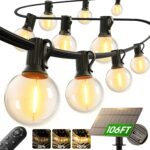
aaddlon 100FT 54LED Solar String Lights Outdoor Waterproof Sale $19.99 + Free Shipping
($43.00)Price drop. Amazon has a aaddlon 100FT 54LED Solar String Lights Outdoor Waterproof Sale, $19.99 after checking instant coupon and discount at checkout and Coupon Code: AQVOCLZR , Free Shipping $35 or with Prime. Expires Soon - Rated 4.3 out of 5 stars
- Ready-to-Install 106FT Solar String Lights Outdoor – More Bulbs, More Coverage, More Value: This complete 106FT set (100FT lighting + 6FT solar panel lead) includes 50 G40 shatterproof LED bulbs (E17 pin-type base) + 4 spare bulbs (54 LEDs total)—offering twice as many replacement bulbs as many comparable solar string lights for longer-lasting use. The 2×50FT light strings with balanced 2FT bulb spacing create wider, more even illumination for patios, backyards, pergolas, gazebos, gardens, balconies, fences, cafés and outdoor entertaining areas
- Upgraded 5000mAh Battery with Solar & USB Charging – Reliable Lighting Even After Cloudy Days: Equipped with an upgraded 5000mAh high-capacity battery, storing significantly more power than many standard 3600mAh solar string lights for dependable overnight lighting. Recharge naturally in sunlight or fully recharge in just 4 hours via USB whenever extended cloudy or rainy weather limits solar charging. Enjoy up to 28 hours of warm illumination without electricity bills, nearby outlets or frequent battery replacements
Sales tax in: All Except AK, DE, MT, NH, OR
Posted: September 12, 2026 6:38 AM PDT
MoreLess
-
 Posted by:
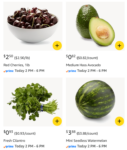
New Amazon Grocery Coupons
Rare to have so many - Save money! New Amazon Grocery Coupons - Free Shipping $35 or with Prime. Expires: 9/15/2026
-
- Buy 3, Save 20% Cascade, Dawn, more
- $20 Amazon Credit when you spend $80 on Nestle - Purina, Nespresso, Orgain, Boost, more.
- Buy 3, Save 20% Dawn, Cascade, more
- Buy $100, Get $25 Credit on Baby items
- Buy $100, Get $25 Amazon Credit on Pampers
- Reorder any 5 items, save 10%
- $20 credit when you spend $100 in Baby items
- Prime members: Buy 4 save 10%
Subscribe & Save Discounts
- Over 100 qualifying items
- Campbell's soup
- Cape Cod chips
- Tea
- Soup
- Drinks
- Snacks
- and more
Posted: September 12, 2026 6:01 AM PDT
MoreLess
-
-
 Posted by:
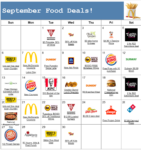
September 2026 Fast Food Deal Calendar
Loading..
Sales tax in: Most States
Posted: September 10, 2026 12:00 AM PDT
MoreLess


Current deals can also provide clues about the types of promotions likely to appear during the holiday season. Compare them with Black Friday offers to see whether the holiday price is genuinely lower.
Products That Require Extra Research
Televisions
Compare the complete model number, screen technology, refresh rate, number of HDMI ports, smart-TV platform and warranty. A low-cost holiday model may have fewer features than a similar-looking television sold throughout the year.
Laptops and tablets
Check the processor, memory, storage, display resolution, battery life and available ports. Confirm whether memory or storage can be upgraded. An inexpensive computer may become frustrating if it cannot comfortably run the programs you use.
Appliances
Add delivery, installation, haul-away charges and required parts to the advertised price. Measure the installation space, doors and hallways before ordering a large appliance.
Video game bundles
Determine whether the included game is physical or digital and whether a subscription automatically renews. Compare the bundle with the regular price of the console and the items you would have purchased separately.
Clothing and shoes
Deep discounts may apply to limited colors, seasonal merchandise or final-sale items. Check whether online purchases can be returned to a local store and whether return shipping is free.
When Should You Buy Early?
Buying before Black Friday can make sense when:
- The product reaches your planned target price.
- You need a specific size, color or model.
- The retailer offers a holiday price-match or price-adjustment policy.
- The item has limited inventory or a long delivery window.
- You need time to inspect, assemble or test it before giving it as a gift.
Do not buy early solely because a retailer labels the promotion “Black Friday.” The label is marketing; the price and terms determine the value.
When Should You Wait?
Waiting may be reasonable when the discount is modest, the item is widely available or you are flexible about the exact model. Cyber Monday, December promotions and after-Christmas clearance can bring additional savings.
However, waiting is a tradeoff. The price may fall, but popular products can sell out and delivery dates may move beyond the holidays.
How to Build a Smarter Black Friday Plan
- Make a list. Separate gifts, household needs and optional wants.
- Set a total budget. Include tax, shipping and accessories.
- Record exact model numbers. This makes comparison shopping faster and more accurate.
- Choose target prices. Decide what each item is worth before the sale begins.
- Create retailer accounts. Verify your address and sign-in information in advance.
- Review return policies. Pay special attention to electronics, opened products and marketplace purchases.
- Check payment protections. A credit card may offer purchase protection or an extended warranty, but rewards do not justify carrying a costly balance.
- Save receipts. Keep confirmations and tracking information until every item has been tested and the return window has ended.
So, Is Black Friday Still Worth Shopping?
Yes—if you approach it as a planned shopping opportunity rather than a contest to collect the largest advertised discounts.
Black Friday may not deliver the year’s absolute lowest price on every item, but it can offer strong prices across many popular gift categories at the same time. That convenience has real value, especially when you have several people to shop for.
The best strategy is to ignore the hype, compare exact products and buy only when the price fits your plan. A deal that saves money on something you need is valuable. A deal that pushes you to buy something unnecessary is not.
Have you ever found a better price before or after Black Friday?
Share your experience in the comments below.


Tags: black friday

1 Comment
Elly
This is both street smart and intelligent.